
This is my conlanging presentation and portfolio. The first section briefly showcases six of my conlangs. Down below is a section detailing my vision of language and conlanging.
For pricing, please refer to the guidelines indicated by the Language Creation Society at this link.
My conlanging
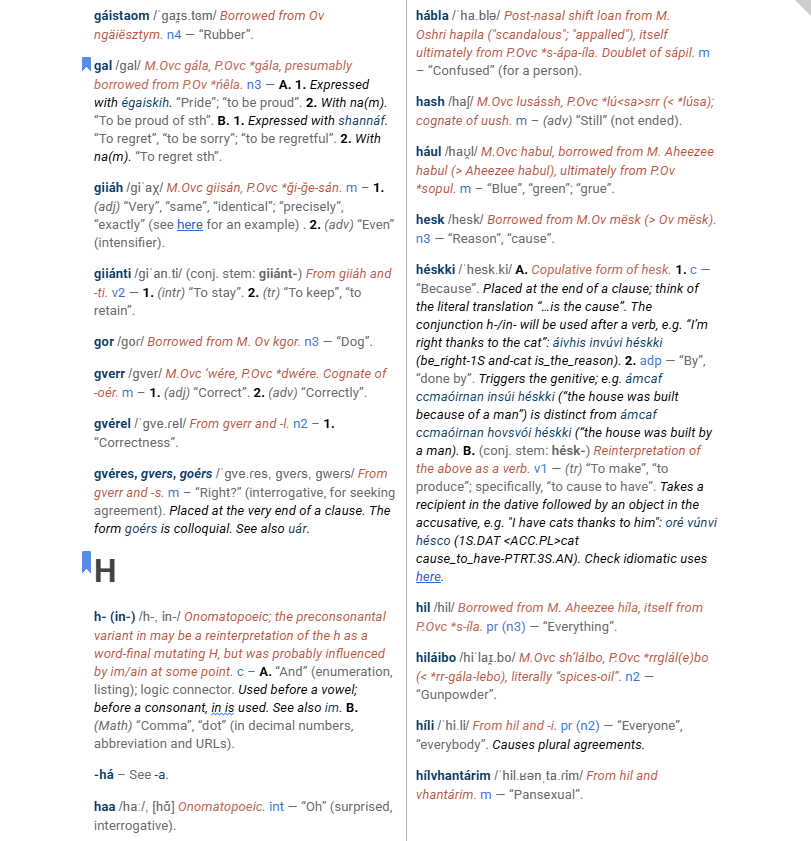
Oavanchy is my main personal project. Actively worked on in 2022 and ‘23, it includes 170 pages of documentation and a lexicon of over 400 words with detailed etymology, pronunciation, culture-dependent idioms and particularities, as well as its own writing system.
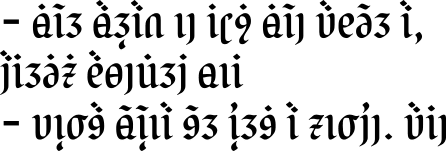
— Thiún thannáh es íshki thius dálvun a, sainvíci láfstinsi thei?
— Déemra thúuao run óonri a cémsos. Dais.
— If you could see your whole life from start to finish, would you change things?
— Maybe I’d say what I feel more often. I don’t know.
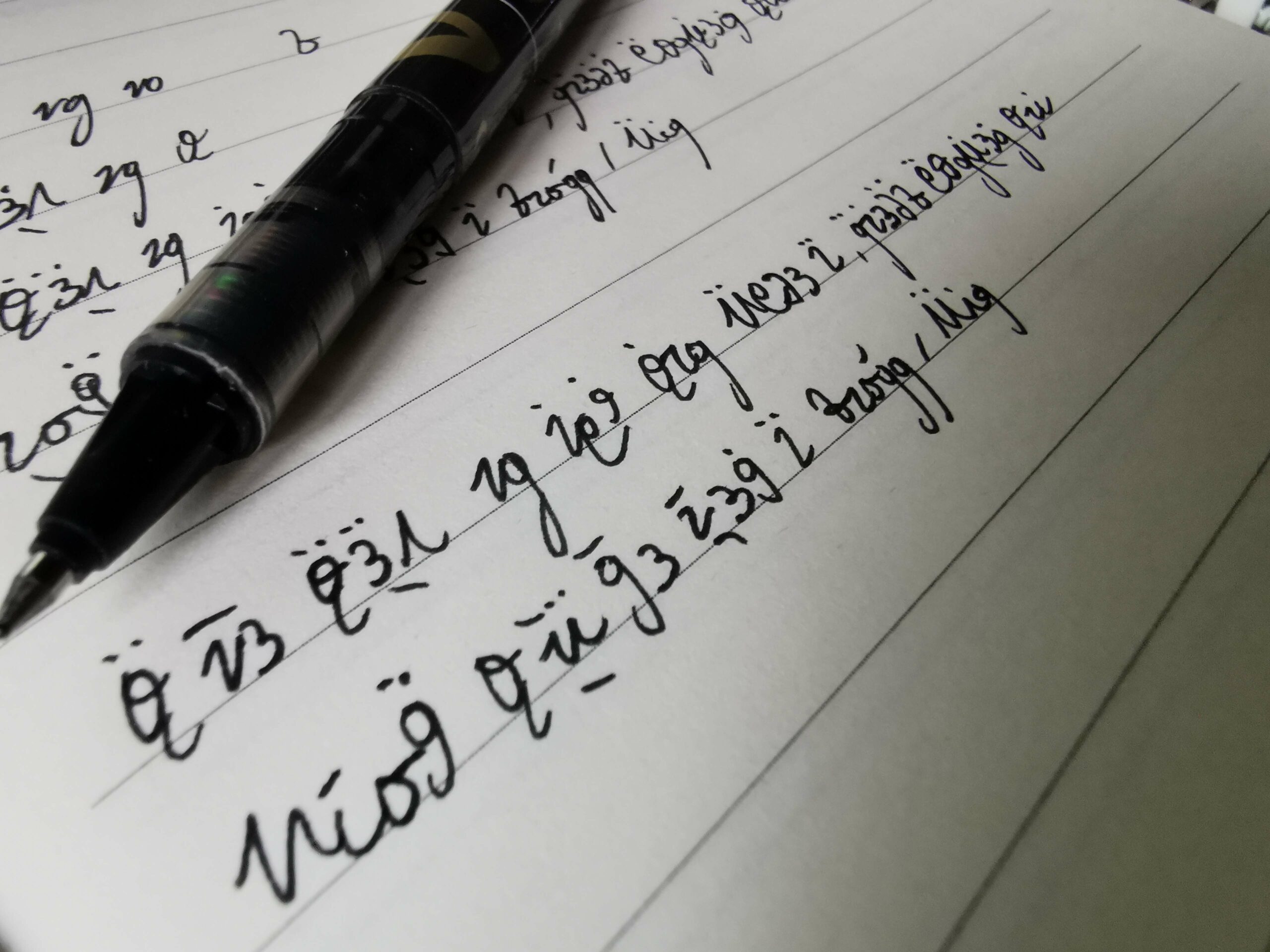
Im uáida cooámsti ishtéiso luih!
You’re one to talk!
Oavanchy saying, literally “and thus spoke the fish of the tree”.


Eisánah anccmaóin as sheoáris.
Time and tide waits for no man.
Oavanchy saying, literally “the river does not dry up for the bridge builder”.

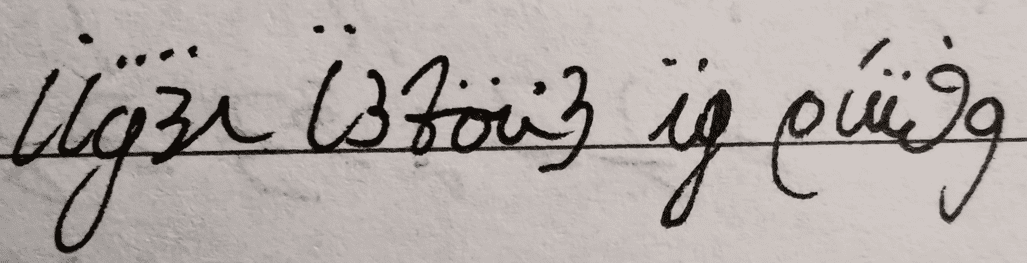
Font design courtesy of Christian Thalmann. The writing system’s design is my own.
PRESENTATION
Aheezee includes about 700 words. It is a well-developed, rather simple conlang of mine, where I go for a more straightforward pronunciation than my usual.
SAMPLE, TRANSLATION & RECORDING
Henjijes fihin isdi, Di. Grinling nyi hfasiener nágu fasihju fihjlyum je ingem ááe, hedyefer um buud gi àdáru má ule àbieles diundyudemijne nág isdigusnyi lyagef ingem wal ule.
Sometimes at night, as Mr Grinling lay sleeping in his warm bed, the ships would toot to tell him that his light was shining brightly and clearly out to sea.
PRESENTATION
Future Toki Pona is a derivative conlang based on Toki Pona, a 120-word language created by linguist Sonja Lang in 2001. It explores how the minimalistic language could have evolved if it was the only language humanity was left with.
SAMPLES, TRANSLATION & RECORDINGS
Tenpira mīareri kenārasa kēn sōriare, tenkara mīareri kenpāri ēni kēn īutsaseri.
In the past we could hunt with animals, in the future we will be able to hunt with rifles.
Sūritomor lāp la mi lāj.
If the dog slept, I would sleep.
PRESENTATION
Akhiyoos was an aesthetic pursuit with a rather simple grammar. I really enjoy the way it looks and sounds.
SAMPLE, TRANSLATION & RECORDING
Nilsiikhot ashin shignek imoek eeste, zma zaarëmyvt svyir äa ikhys inshi. Sir äa ësvus, äazyl sti nilikhete tuushailek imoek, zis äaëër eest.
Love is when you’re missing some of your teeth, but you’re not afraid to smile. Because you know your friends will still love you, even though part of you is missing.
PRESENTATION
Varey was specifically an orthography challenge, with complex changes happening under specific grammatical circumstances.
SAMPLES & TRANSLATION
Uðkirþ lëy ivur hëmborrëþuþke uara stëcüfsöenüðä ergeþ þorë, moha gäya teðroymä þu?
Wouldn’t you want the afterlife to be more than a way to make up for your earthly existence?
Caðsat lëy üscö prieta ske gäta teðsparë gäa iþnauhem þu vä naryëy.
Love is when you’re missing some of your teeth, but you’re not afraid to smile.
PRESENTATION
The Xundil languages (1 and 2) are sister dialects that I developed in parallel from a common ancestor. You can maybe tell that they are a little similar.
SAMPLE & TRANSLATION
1. Assurese meikysslivi futsiri ge ok ipelt hon, aimach ok meikyss unthu hon.
2. Wiaentse ges meiköislengi foustiri wiai iialt on, houima wiai meiköis untsu on.
Actually, you’re not in my book of animals, therefore you’re not a real animal.
Gallery
What conlanging is to me
From the moment that the human social structure began to differentiate itself from that of the other apes, approximately 500,000 years ago, language has accompanied us closely. With it, we increased our reliance on cooperation and information exchange, labelled objects, then concepts, emotions, and even ourselves. Language witnessed the dawn and rise of our civilisation. It was there when we invented abstraction (art), long before we decided to write it, a mere 5,000 years ago.
Both reflecting and strengthening social structure, cultural values, and emotional bonds, language has penetrated the model of our species deeply. Whether smithed by countries or by artists, wielded as a tool of national superiority or of personal identity, shaped by norm or by usage, it is something we have in common across borders, traditions and beliefs.
Because language is “us” at such a fundamental level, it fascinates us. We seek to understand it, master it or control it, often failing to realise that it defines us, as much as we define it.
Creating a language is a deep dive into what makes us human. It requires creativity, but also scientific knowledge and introspection, for a constructed language to resonate with us and truly appeal to our senses. Through words, we retrace the steps of History: that of language itself, but also that of our minds, and of our species.
As such, conlanging may be the most meaningful form of art to me.
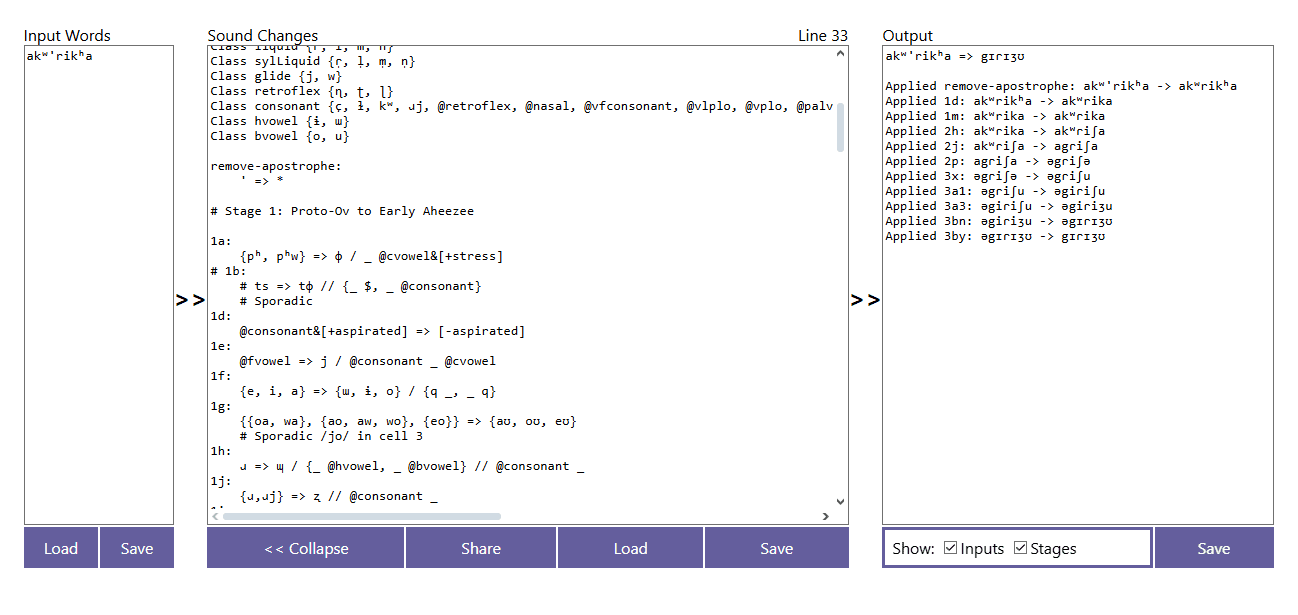
My first conlang saw the light of day in 2015, as I began to take a deep interest in linguistics. During the decade of studying that followed, I integrated into my conlangs concepts that were close to my heart, such as evolutionary processes, cultural context, and phonetic appeal in particular. I am also an enjoyer of complex orthographies. Recurring influences of mine include Hungarian, Irish and Turkish, as well as Indo-European languages in general. I feel irrational affection for the letter <ë>.